

+918048046790

Currently it only shows your basic business info. Start adding relevant business details such as description, images and products or services to gain your customers attention by using Boost 360 android app / iOS App / web portal.

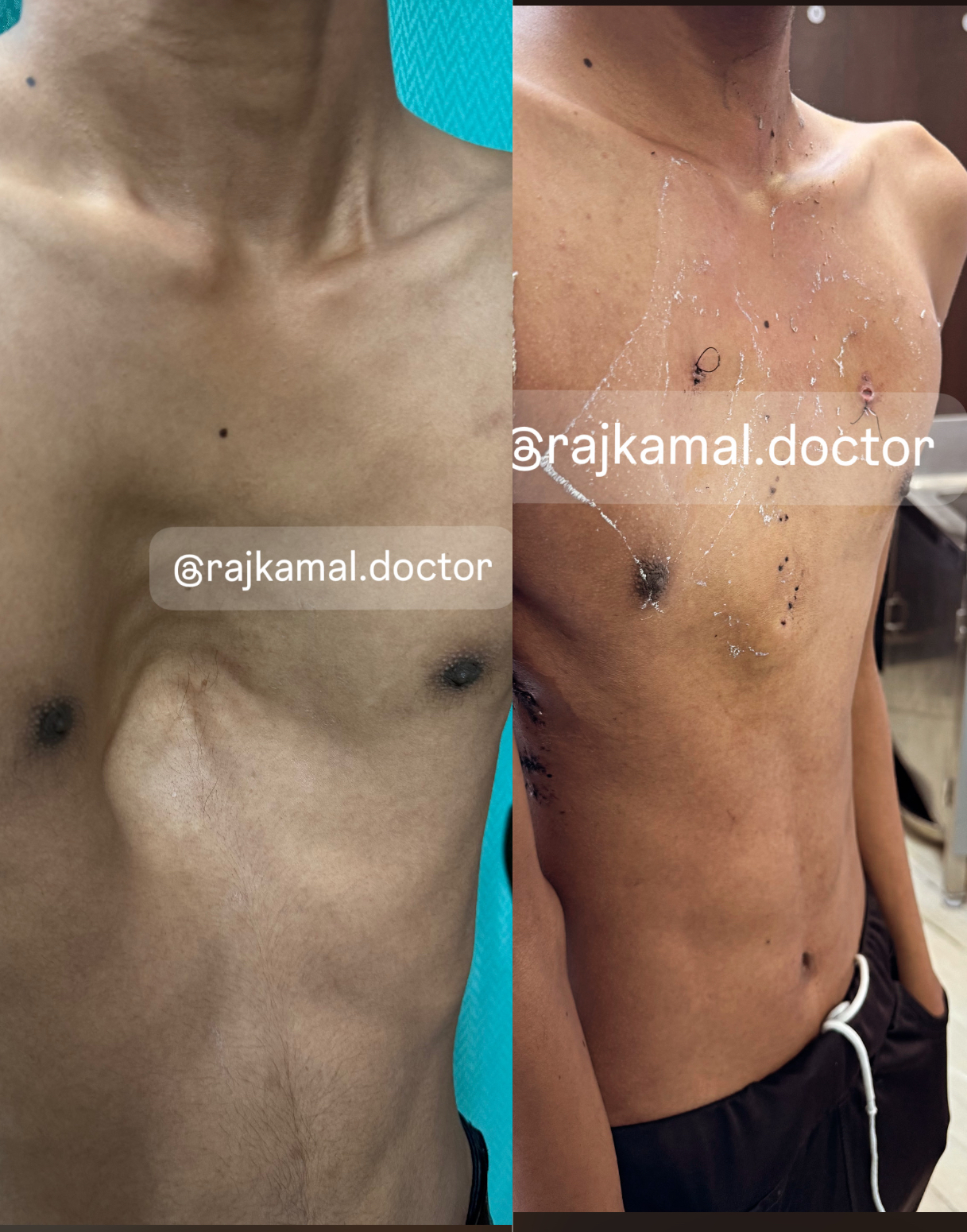
Pectus excavatum, commonly known as “sunken chest, ” is the most frequent chest wall deformity. Among its various forms, the Grand Canyon type represents one of the most severe and complex presentations. In this condition, the sternum and rib cage are deeply depressed, creating a striking “canyon-like” hollow in the chest. For patients and families, the deformity is not only a cosmetic concern but also a source of physical and psychological distress. ⸻ Understanding the Grand Canyon Type Deformity In the Grand Canyon type pectus excavatum: • The depression is very deep and extensive, often extending across the midline. • The chest wall appears elongated and asymmetric, producing a visible canyon-shaped hollow. • It frequently affects adolescents and young adults, when the chest wall becomes less flexible and the deformity more pronounced. ⸻ Complications of Severe Pectus Excavatum Severe deformities can lead to functional and psychosocial issues, including: 🔹 Cardiac Compression – The sternum may push against the heart, reducing right ventricular filling and affecting cardiac output. 🔹 Respiratory Restriction – Limited lung expansion can cause exertional breathlessness and poor exercise tolerance. 🔹 Postural Changes – Patients often adopt a stooped posture, with shoulder drooping and chest narrowing. 🔹 Psychological Impact – Social anxiety, body image concerns, and reduced self-esteem are significant in teenagers and young adults. In advanced types such as the Grand Canyon deformity, these complications are often more severe and disabling. ⸻ Minimally Invasive Surgical Correction The patient in the images (19 years old) presented with severe Grand Canyon–type pectus excavatum. After detailed CT evaluation, he underwent a Minimally Invasive Repair of Pectus Excavatum (MIRPE). The technique involves: 1. Elevating the chest wall using a crane system for safety. 2. Inserting a custom-shaped pectus bar behind the sternum. 3. Securing the bar with stabilizers to maintain correction. Results: Before and After • Before surgery: A deep, canyon-shaped chest wall depression was visible, with significant asymmetry. • After surgery: Immediate correction was achieved with restoration of a normal, flat chest contour. The patient’s confidence and posture improved dramatically. The minimally invasive technique ensures smaller scars, quicker recovery, and excellent cosmetic outcomes, even in very severe deformities. ⸻ Takeaway The Grand Canyon type of pectus excavatum is one of the most challenging forms of chest wall deformity. Left untreated, it can cause serious health and psychosocial problems. However, with modern minimally invasive techniques, even the most severe deformities can be corrected effectively, offering patients both functional and emotional relief. In Chennai, I specialize in advanced pectus correction surgery, providing consistent results for patients across all age groups. 👉 To know more or book a consultation: Dr. Rajkamal Vishnu | Pectus Surgery Specialist 🌐 www.pectussurgeon.in Best Pectus Excavatum Surgery in Chennai Dr. Rajkamal Vishnu Severe Chest Deformity Correction India SIMS Hospital Chennai Minimally Invasive Pectus Surgery in Tamil Nadu Dr. Rajkamal Vishnu best doctor for pectus excavatum in Chennai • where to get pectus surgery in India • affordable pectus excavatum surgery Chennai • pectus carinatum brace treatment India • experienced thoracic surgeon for chest deformity Chennai • latest techniques for pectus surgery India • minimally invasive chest deformity correction Chennai • pectus surgery specialist Dr. Rajkamal Vishnu


